

James Nunns
12 November 2018
Using Juju to manage evolving complex software
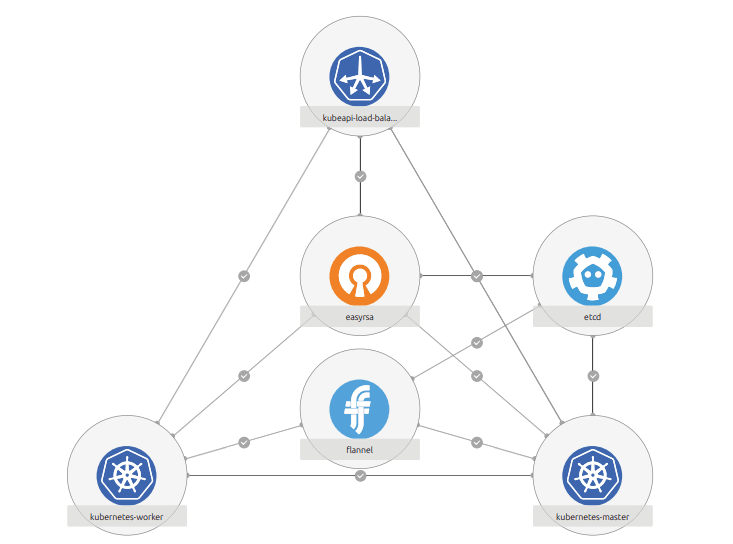
With developers increasingly moving towards microservices – and with the growing prevalence of the cloud as the default platform – software has become more complex than ever.
While installing all of the interconnected applications that make up a modern software stack is becoming easier, the real sting in the tail comes on day two and beyond – when it is time to maintain, upgrade, and scale the deployment.
Deployed software is constantly evolving through updates, configuration changes, changes in scale, and more. Keeping a complex deployment up-to-date and functioning perfectly in spite of these changes represents an immense challenge. And for operators maintaining these deployments, the cost in both time and cognitive load can be tremendous.
The shift to cloud has changed the way people think about operating software. Instead of reasoning about discrete machines, it’s now a matter of carving up compute capability. Juju embraces this mindset by enabling operators to focus on the software model, rather than machines and instance details.
This model-driven approach – made possible through the use of distributed agents – dramatically reduces the complexity of managing complexity. Juju handles upgrades and changes in configuration, scale, and components out of time, removing the complexity of maintaining large estates that can often be time consuming, challenging and costly to manage.
In the past, a stand-alone application was typically enough to solve a particular problem or provide a service to end users. But today’s solutions increasingly demand large bundles of interconnected microservices distributed across many machines, and potentially operating systems, to fulfil a single function.
Whitepaper highlights:
- How constantly evolving software impacts automation, testing, and onboarding, and how Juju solves these issues
- How Juju lets operators focus on the software model, rather than machines and instances details
- How upgrades and changes in configuration, scale and components are handled by Juju


